Some young people are carrying more than they can manage on their own.
You may have noticed your child withdrawing, or becoming angry in a way that doesn’t seem like them. They may be anxious about school, or refusing to go. They may be struggling with friendships, not sleeping, melting down or shutting down at the end of every day, or holding something they cannot yet put into words. You may simply have a feeling that something is not right.
You may also have been round this a few times already. Long CAMHS waits, a service that discharged you, a professional who did not adapt to your child, or a school that saw behaviour rather than distress.
I work with children and young people aged 9 to 18, online across the UK and internationally, and face to face in Uxbridge. I particularly welcome those who are neurodivergent, who have SEND, or who have been through frightening, unstable or chaotic early experiences.

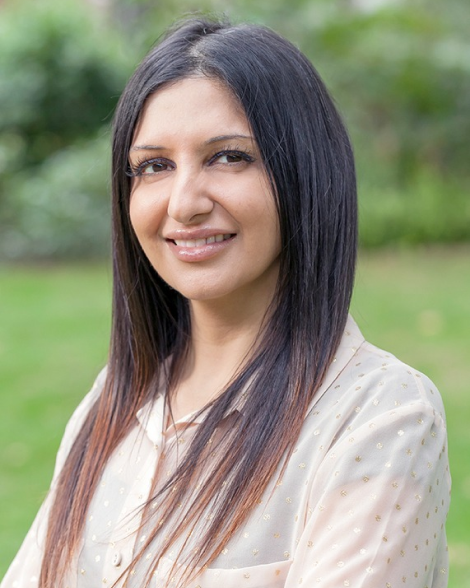
Before training as a psychotherapist, I spent over twenty years in education. I am a qualified teacher and a former SENDCo. I have worked closely with young people of this age for most of my professional life, a great many of them with additional needs, and I understand school from the inside: EHCPs, SEN support, exclusions, and the reality of what schools can and cannot do.
I then trained as a trauma therapist. My adult practice is entirely with people healing from childhood trauma, which means I spend my working life seeing where unaddressed distress in childhood leads. That is a large part of why I wanted to work with young people directly.
Autistic and ADHD young people are more likely to have had experiences that leave a mark: being misunderstood, punished for things they could not help, excluded, bullied, or asked to spend every day masking until there is nothing left.
The result often looks like anxiety, anger, low self-worth, school refusal or shutdown, and it is frequently treated as behaviour rather than as distress.
I work with both together, because in most of the young people I see they are not separable.
I adapt to the young person rather than expecting them to adapt to me. That might mean drawing, using objects, walking through something sideways rather than head on, working with less eye contact, allowing silence, or letting a session be shorter on a hard day.
Younger children often do not want to sit and talk, and they do not have to. Older teenagers usually want to be taken seriously as people in their own right, and that is what I offer them.
I am an integrative therapist, so I draw on different approaches depending on who is in front of me. I am trauma-informed throughout, which means stability and safety come before anything else. I will not push a young person into difficult material before they are ready to hold it.
Where it would help, and with your agreement, I am happy to liaise with your child’s school or SENDCo. I speak that language.
Support for autistic and ADHD young people, including those awaiting assessment.
Please note that I offer therapeutic support, not diagnosis. I do not carry out assessments for ADHD or autism,
as these need a psychiatrist, paediatrician or clinical psychologist with diagnostic training.
This is what parents ask me most.
What a young person tells me stays between us. That privacy is what makes counselling work: they need to know they can speak freely. I will not give you a report of what your child has said.
What I will share, with your child’s knowledge, is a general sense of how things are going and whether counselling seems to be helping.
The exception is safety. If I believe your child or another child is at risk of serious harm, I will act, and that may mean telling you or contacting other services. I explain this to your child at the start in words they understand, so nothing comes as a shock.
I have a written safeguarding policy, which I am happy to share with you.

I am a qualified teacher with a Postgraduate Certificate in Education and over twenty years’ experience in education, including as a SENDCo.
I hold a Postgraduate Diploma in Counselling and Psychotherapy and a specialist post-qualifying Diploma in Counselling Children and Young People. I am registered with the BACP and work within their Ethical Framework.
I hold an enhanced DBS certificate including the children’s barred list, I am fully insured for work with children and young people, and I receive regular clinical supervision with a supervisor experienced in this field.
I have also trained in attachment difficulties, ADHD and autism spectrum condition with Dr Jennifer Nock, in trauma and attachment with PAC-UK, and in adverse childhood experiences with Barnardo’s and Public Health England.
I hold up-to-date safeguarding training, and was previously a Safeguarding Lead in schools.
Online sessions: £80 per session, 50 minutes, available across the UK and internationally.
Face-to-face sessions: £95 per session, 50 minutes, in Uxbridge, North West London. This includes room hire.
I offer a small number of reduced-fee places for families on a low income or in receipt of benefits. Please get in touch to ask about availability.
I offer a free 20-minute call for you as the parent or carer, so you can ask questions before committing to anything.
If it feels like a good fit, we begin with a fuller session with you, charged at the usual session fee, so I can hear your child’s history and what has been happening. Your child’s first session follows after that.
You can read more about me and my work with adults on my home page.
If your child is in immediate distress or at risk, please contact your GP, call NHS 111, or, in an emergency, call 999 or go to A&E.
Childline is available free on 0800 1111, PAPYRUS HOPELINE247 on 0800 068 4141, and Samaritans on 116 123. You can also text SHOUT to 85258.

I know it can feel daunting to reach out to a new therapist, so I offer a free 20 minute clarity call where we can have an initial chat. This enables us to discuss the reasons you are thinking of therapy for your child and figure out whether I am the right person for them.
Please do contact me if you have any questions about how counselling works, to arrange your 20 minute clarity call, or arrange an initial assessment appointment.
I endeavour to respond to all enquiries within 2 working days, and all contact is strictly confidential.
Please contact me using the form, or email me at: shabnum@shabnumhasancounselling.com